Losing teeth changes more than a smile. It changes how you eat, how you speak, and how confident you feel walking into a room. If you have been wearing removable dentures and dealing with slipping, sore spots, or the constant worry of them shifting at the wrong moment, you are far from alone, and there is a solution that solves those problems at the source.
At Revive Dentistry, we help patients throughout Orange City and West Volusia County move past the daily frustrations of traditional dentures by exploring implant-supported options built for stability and comfort. We take the time to walk you through every option, explain your X-rays, and make sure you feel completely informed before deciding what is right for you.
Why Traditional Dentures Fall Short Over Time
Traditional dentures rest on the gums and rely on suction, adhesive, or the natural contour of your jaw to stay in place. That works reasonably well at first, but the jawbone beneath a denture begins to shrink once teeth are gone, because bone needs the stimulation of tooth roots to maintain its density. As the bone changes shape, dentures that once fit snugly start to loosen.
This is why so many denture wearers find themselves reapplying adhesive multiple times a day, avoiding certain foods, or feeling self-conscious about a denture slipping while they talk or laugh. It is not a failure of hygiene or effort. It is simply the nature of a removable appliance sitting on a foundation that keeps changing.
How Implant-Supported Dentures Solve the Stability Problem
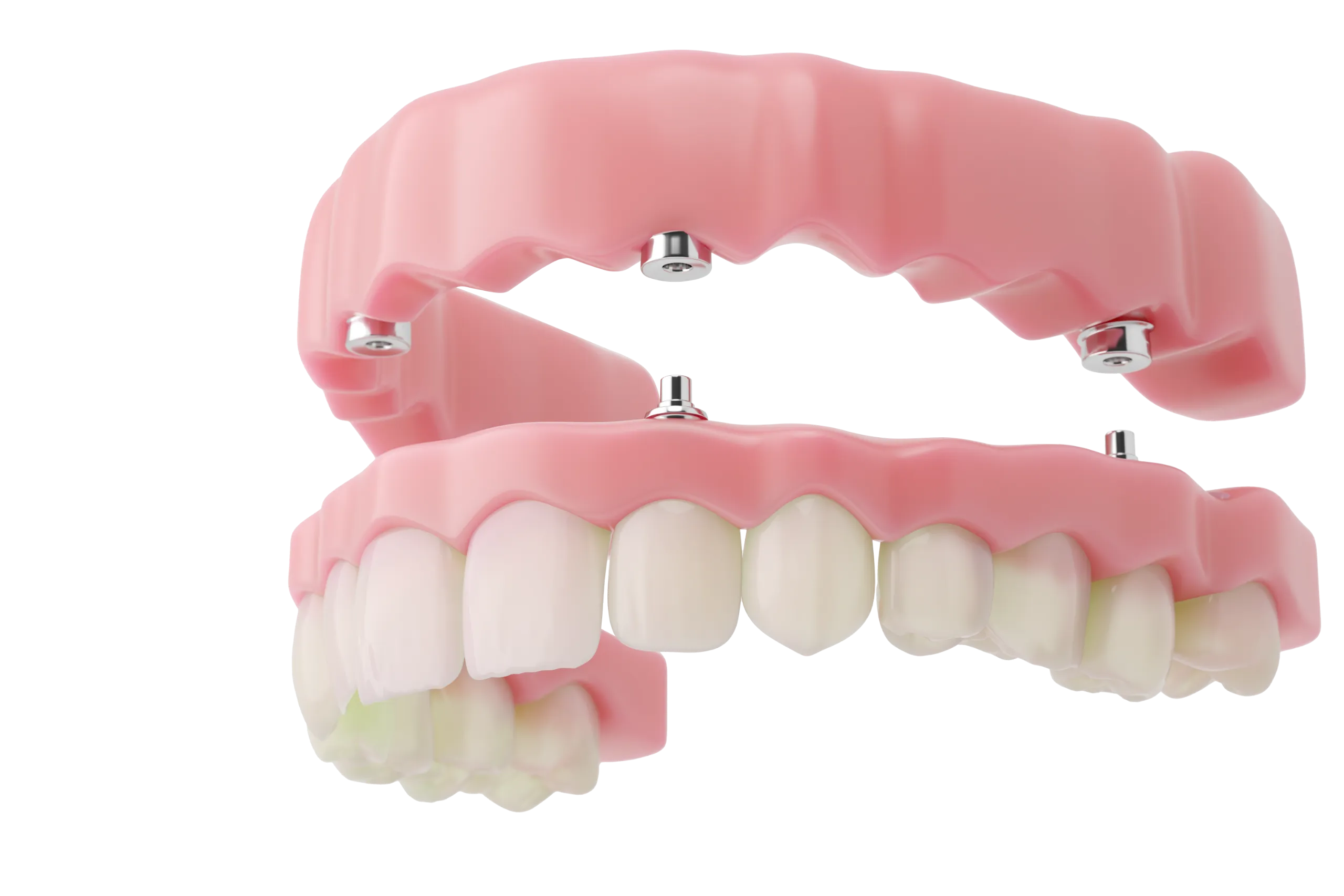
Implant-supported dentures anchor to titanium posts that we place directly into the jawbone, where they fuse with the bone over time in a process called osseointegration. Instead of resting loosely on the gums, the denture snaps or locks onto the implants, creating a level of stability that traditional dentures cannot match.
That stability translates directly into daily life. Patients tell us they can eat foods they had given up on for years, from crisp apples to corn on the cob, because the denture no longer shifts under pressure. Speaking becomes easier too, because the appliance is not moving around as you form words. Beyond the practical benefits, the implants themselves help preserve the jawbone by continuing to provide the stimulation your body needs, which helps you maintain your facial structure over time.
A recent systematic review comparing implant-supported dentures to conventional removable options found consistently higher patient satisfaction and better functional outcomes with the implant-supported approach.
What the Switch Actually Looks Like
Making the switch from traditional to implant-supported dentures typically starts with a consultation where we evaluate your bone density, oral health, and goals using advanced imaging technology. From there, the process usually unfolds over a few appointments spread across several months to allow proper healing and integration.
Every case looks a little different depending on how much bone is available and how long you have been without teeth. For patients who have experienced significant bone loss, we may recommend PRF, a technique that uses your own blood, processed and concentrated, to accelerate healing and support stronger integration with the implants. This is one of the ways we tailor treatment rather than offering a one-size-fits-all solution.
Before moving forward with any treatment, it helps to understand what sets these two approaches apart, and the following points highlight the core differences patients ask about most:
- Stability: Implant-supported dentures anchor to the jawbone, while traditional dentures rest on the gums and can shift.
- Bone health: Implants help preserve jawbone density, while traditional dentures do not prevent bone loss.
- Daily confidence: Implant-supported dentures reduce the risk of slipping while eating or speaking, which traditional dentures cannot fully eliminate.
- Longevity: Implant-supported dentures are built to last many years with proper care, while traditional dentures often need relining or replacement sooner.
Many patients tell us the difference is immediately noticeable once the healing period is complete and the new denture is in place.
Reach Out to Revive Dentistry to Discuss if Implant-Supported Denture is Right for You
Not every patient is a candidate for implant-supported dentures right away, particularly if significant bone loss has already occurred, but that does not mean the option is off the table. We evaluate every patient individually, and in many cases, bone grafting or PRF can create the foundation needed to move forward.
Dr. Omid Khezri brings a whole-person, education-first approach to every consultation, and his credentials, including Fellowship and Mastership status achieved through hundreds of hours of advanced training, mean you are getting guidance from someone at the top of the profession. If you have been living with the frustrations of traditional dentures and want to know whether implant-supported options make sense for your smile, we invite you to contact our office and schedule a consultation.